

What is real-time 3D?

Real-time 3D, generated by historically game engines, allows for the instant generation and display of three-dimensional graphics in real-time, typically for interactive purposes.

It differs from pre-rendered 3D, where 3D images are pre-computed and saved for later playback.

Real-time 3D is commonly used in various fields, including video games, simulation, architecture, product design, virtual reality (VR) or augmented reality (AR) applications, and many others.

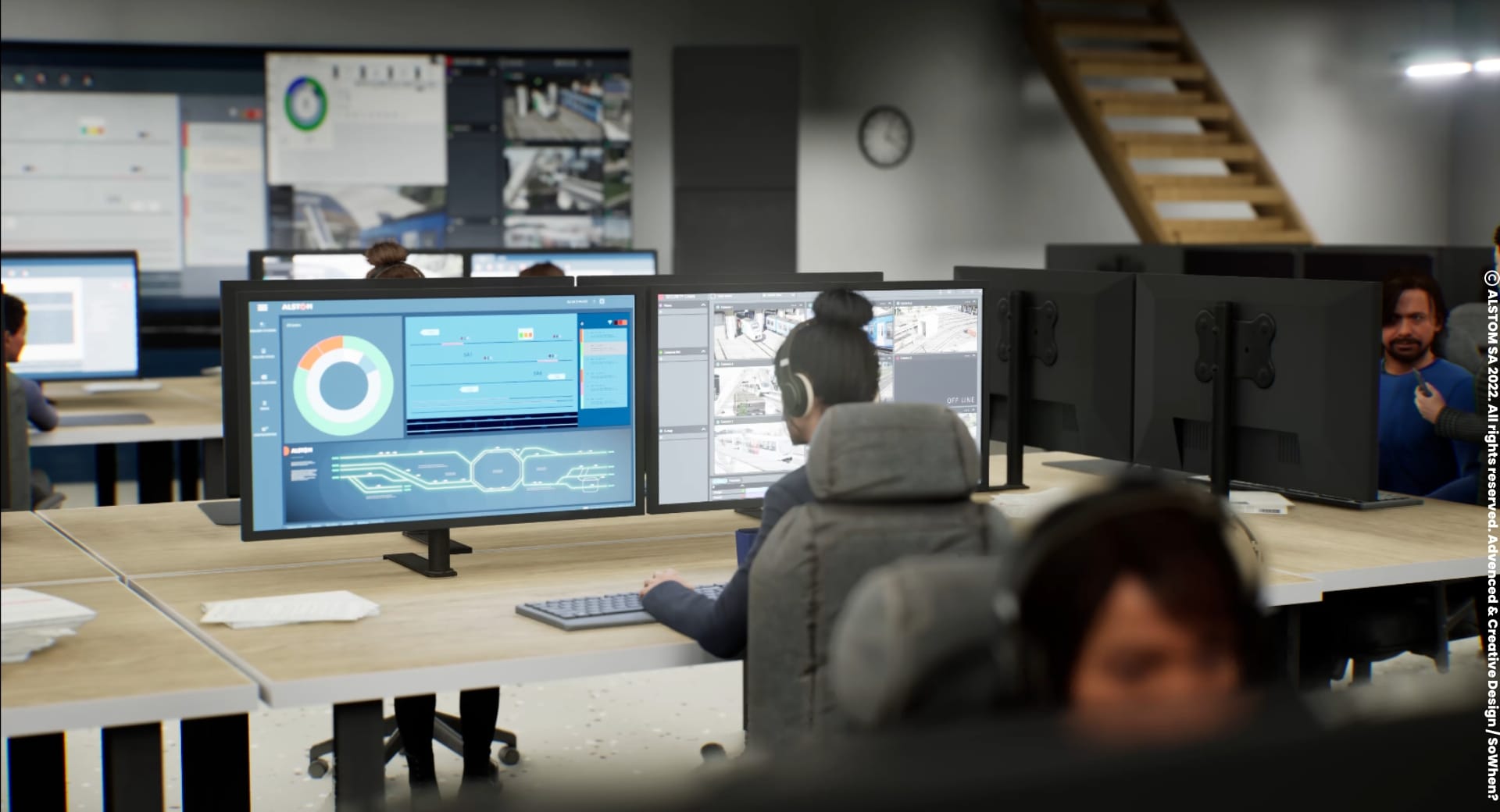
Virtual control centre with operators and screens, Alstom's real-time 3D world
"Alstom's virtual control center."
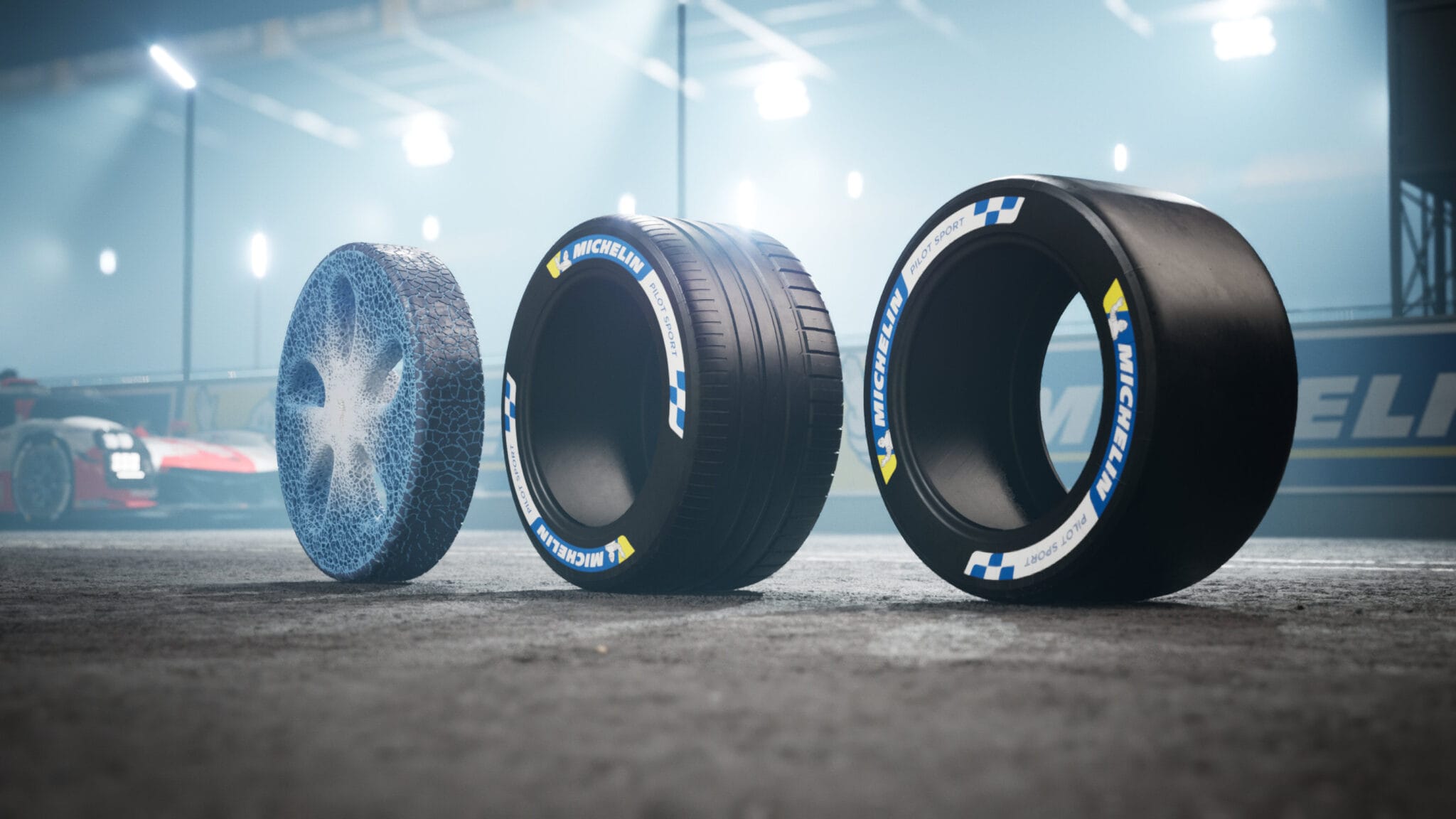
Three Michelin tyres in real-time 3D, Le Mans 24 Hours centenary film
"Film produced for Michelin on the occasion of the 24 Hours of Le Mans centenary."

“Improved profitability, time savings, enhanced collaboration, and increased productivity are just a few of the many benefits that have convinced 85% of these companies that game engine technology will play a significant role in their future.” – from Forrester’s EPIC GAMES survey.

Here are six key features of real-time 3D:

1. Highly natural interactivity.

The main characteristic of real-time 3D is its interactivity with immediate response. Users can interact with the 3D environment, move objects, adjust settings, or even create new elements in real-time. Depending on the actions they perform, results are generated nearly instantly (around 1/60th of a second per frame), providing highly natural interactivity.

2. A smooth, low-latency user experience.

Real-time 3D systems are designed to display 3D images at high refresh rates, often ranging from 30 to 60 frames per second (FPS). This enables a smooth, low-latency user experience.

3. Immediate feedback within the virtual world.

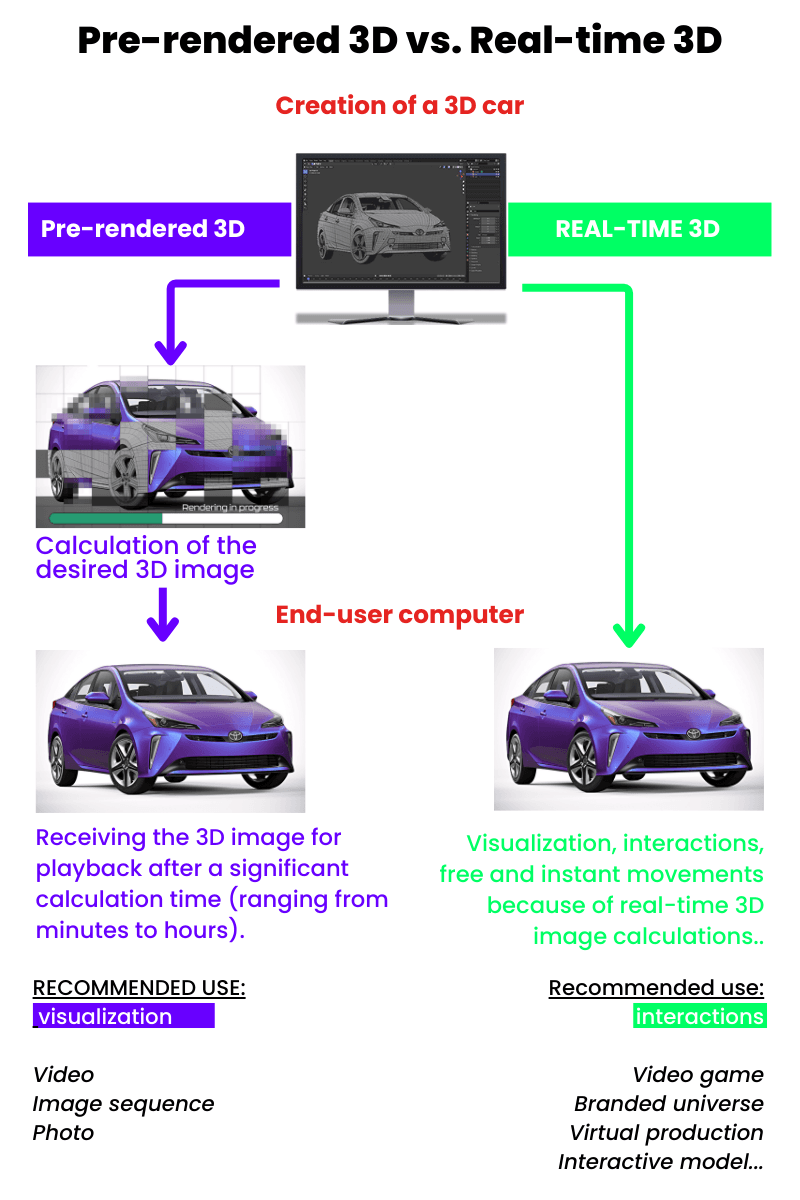
Unlike pre-rendered 3D, where images are rendered in advance (for videos or image sequences), real-time 3D generates images on the fly, performing complex calculations in real-time for each displayed frame.

Diagram comparing pre-rendered 3D and real-time 3D, using a car as the example

4. Diverse applications

Real-time 3D is used in a wide range of applications, from video games, where it enables players to control characters and explore virtual worlds, to product design, where it facilitates the visualization of 3D prototypes, as well as in training, simulation, and many more.

At SoWhen?, we use real-time 3D to meet our clients’ interactivity needs through custom virtual worlds, phygital experiences with behavioral AI, learning games, and phygital models to convey scientific concepts to the general public.

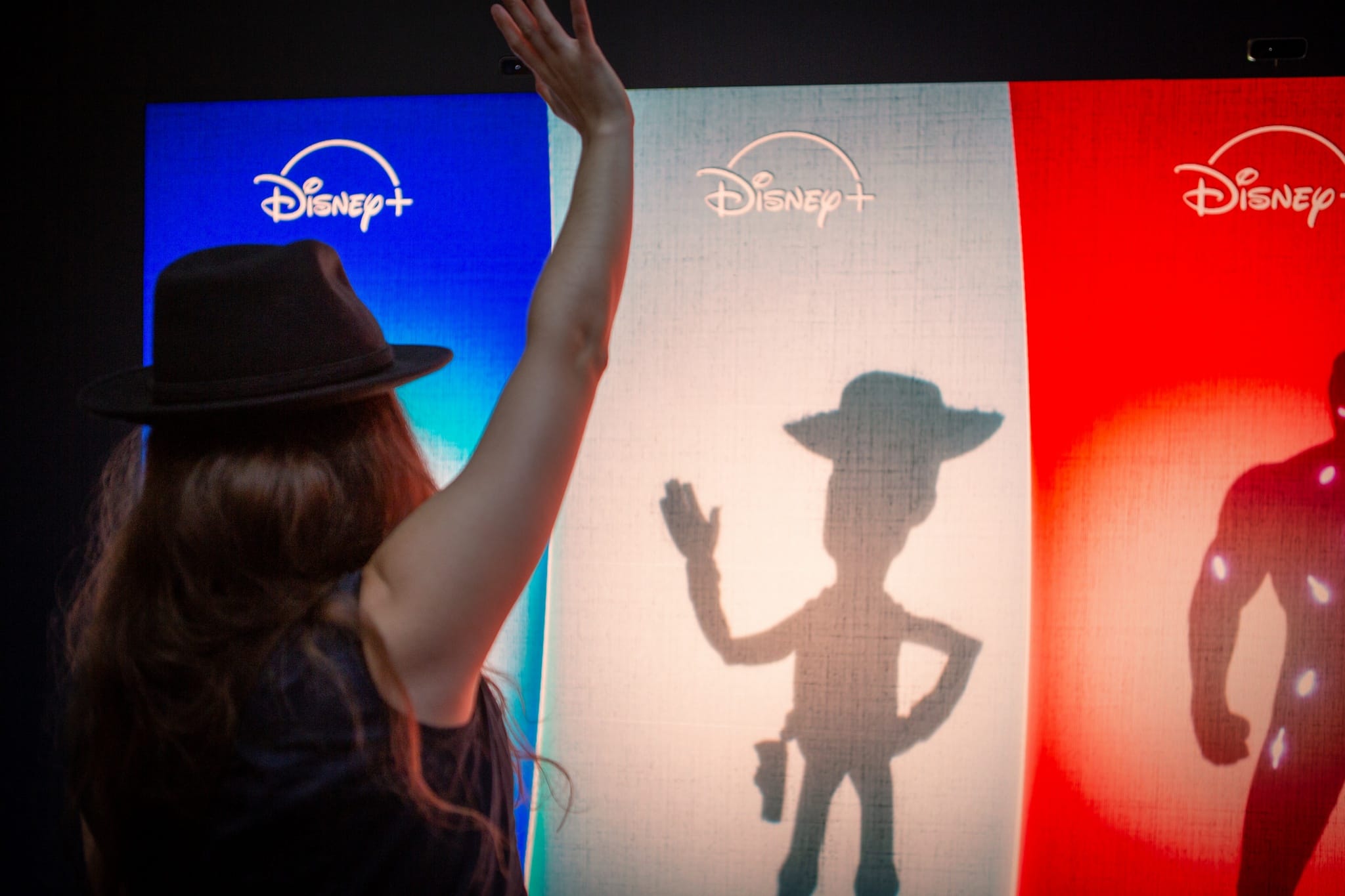
Here are some examples of projects carried out using Unreal Engine (UE5): Alstom’s virtual universe, Michelin’s 3D film shown during the 24 Hours of Le Mans centenary, Disney+’s interactive experience ‘The Wall of Shadows,’ and the portable phygital model by Regen Lab.

Visitor waving at Woody's shadow on the interactive Disney+ shadow wall
"Interactive experience created for Disney+."
Host presenting the Michelin Regen'Lab model to motorcycle riders
"Portable interactive model created for Michelin."
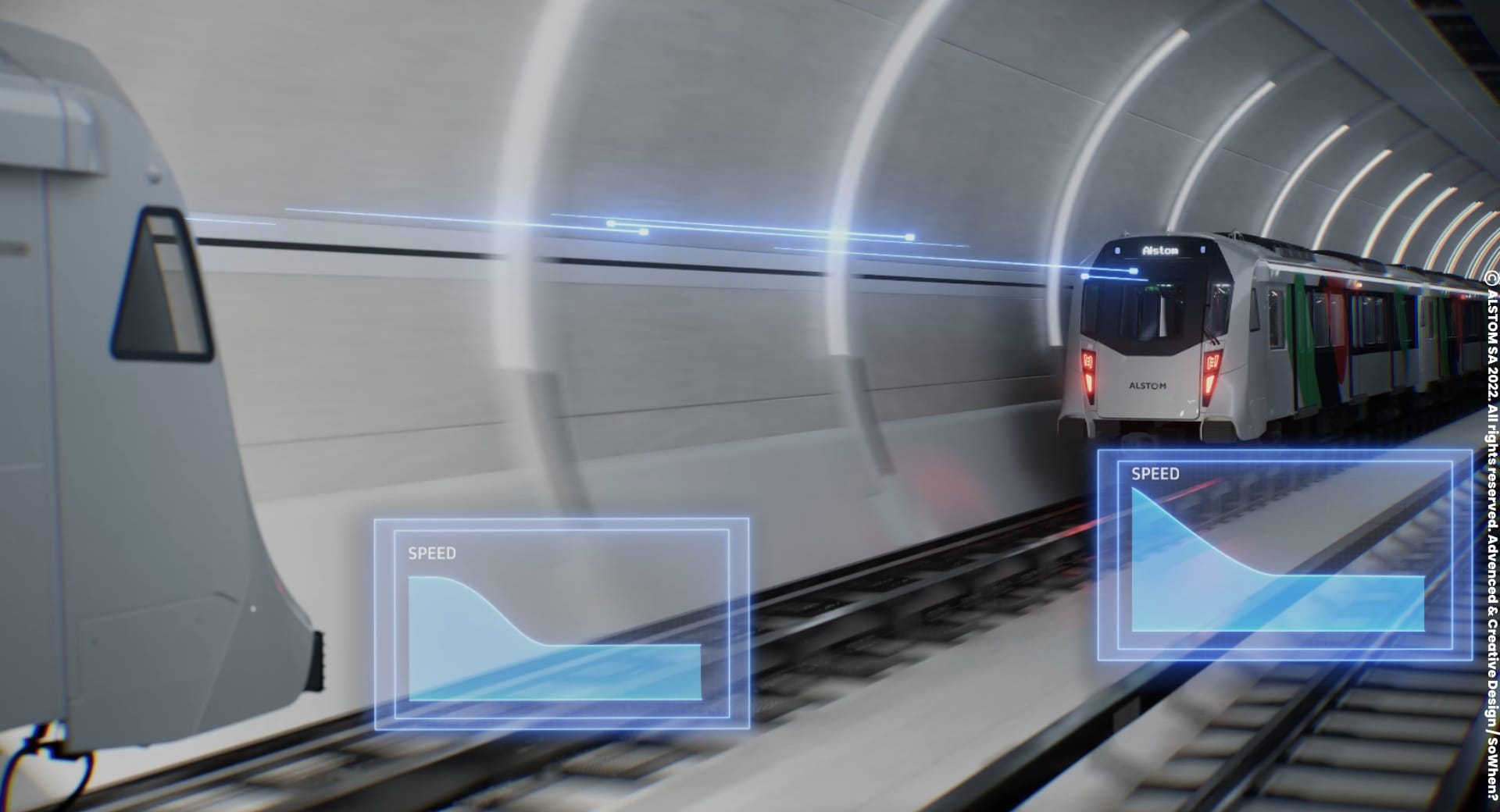
Data flow visualisation on two trains in Alstom's virtual world
"Visualization of data flows in the virtual world created for Alstom."

5. Utilization of powerful hardware

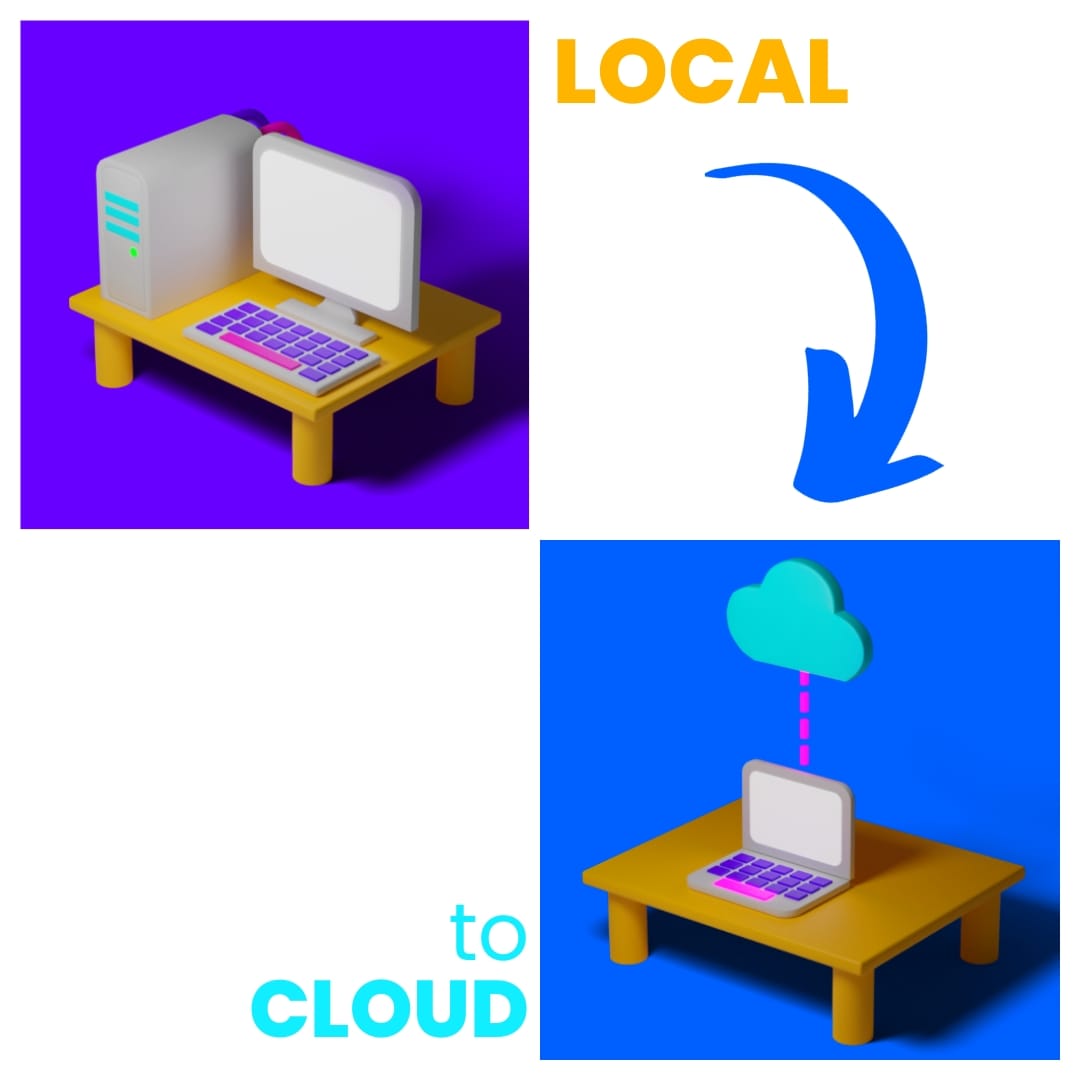
To generate complex worlds with high fidelity lighting and materials, featuring extensive data and a large variety of interactions, it is often necessary to have powerful computer hardware, especially high-performance graphics cards (GPUs). These expensive machines now have a more flexible and accessible digital counterpart through cloud computing.

6. Cloud computing for increased accessibility

According to the Unreal Engine (UE) Forrester report, 77% of companies aim to enhance team collaboration using real-time tools. Epic Games has therefore decided to increase UE integration into a cloud-focused ecosystem (web-hosted virtual machines) with features like Pixel Streaming. This allows companies to address their specific needs by adjusting subscriptions instead of purchasing physical machine clusters.

Illustration of moving from local computing to the cloud

7. Nearly equal image quality today between pre-rendered 3D and real-time 3D.

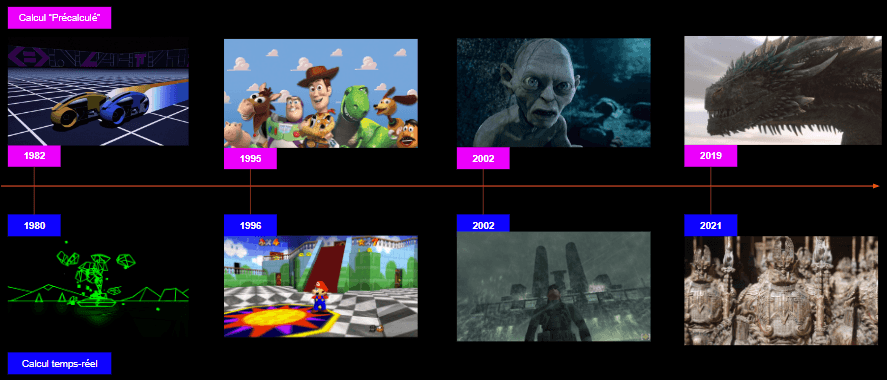
In the beginning, real-time rendering couldn’t achieve the same image quality as pre-rendered 3D.

Over the past 40 years, computational power has overcome certain constraints, enabling the generation of highly realistic real-time images.

The quality gap between the two is narrowing with technological advancements, leading to an ever-expanding range of applications and industries for real-time rendering.

Timeline comparing the evolution of pre-rendered and real-time 3D from 1980 to 2021

Discover other articles

Follow our news and discover the latest articles about our business, the market, the tips we offer you…